Global healthcare's next challenge: the rise of chronic diseases
Medical advancements over the past decades have increased life expectancy and improved outcome for many acute conditions. Over the next decade, however, the most pressing priority for our healthcare systems will shift from coming up with the next “cancer moonshot” to managing a spiralling chronic disease “epidemic”.
There is no denying that the sugar-coated ‘western lifestyle’ with alcohol, processed food and physical inactivity is a key factor for the rise in chronic diseases. Aging is another driver for the increase in chronic conditions such as diabetes and Alzheimer’s. Chronic diseases require ongoing medical attention and last years, if not a lifetime.

Scroll down
Chronic disease prevalence is accelerating
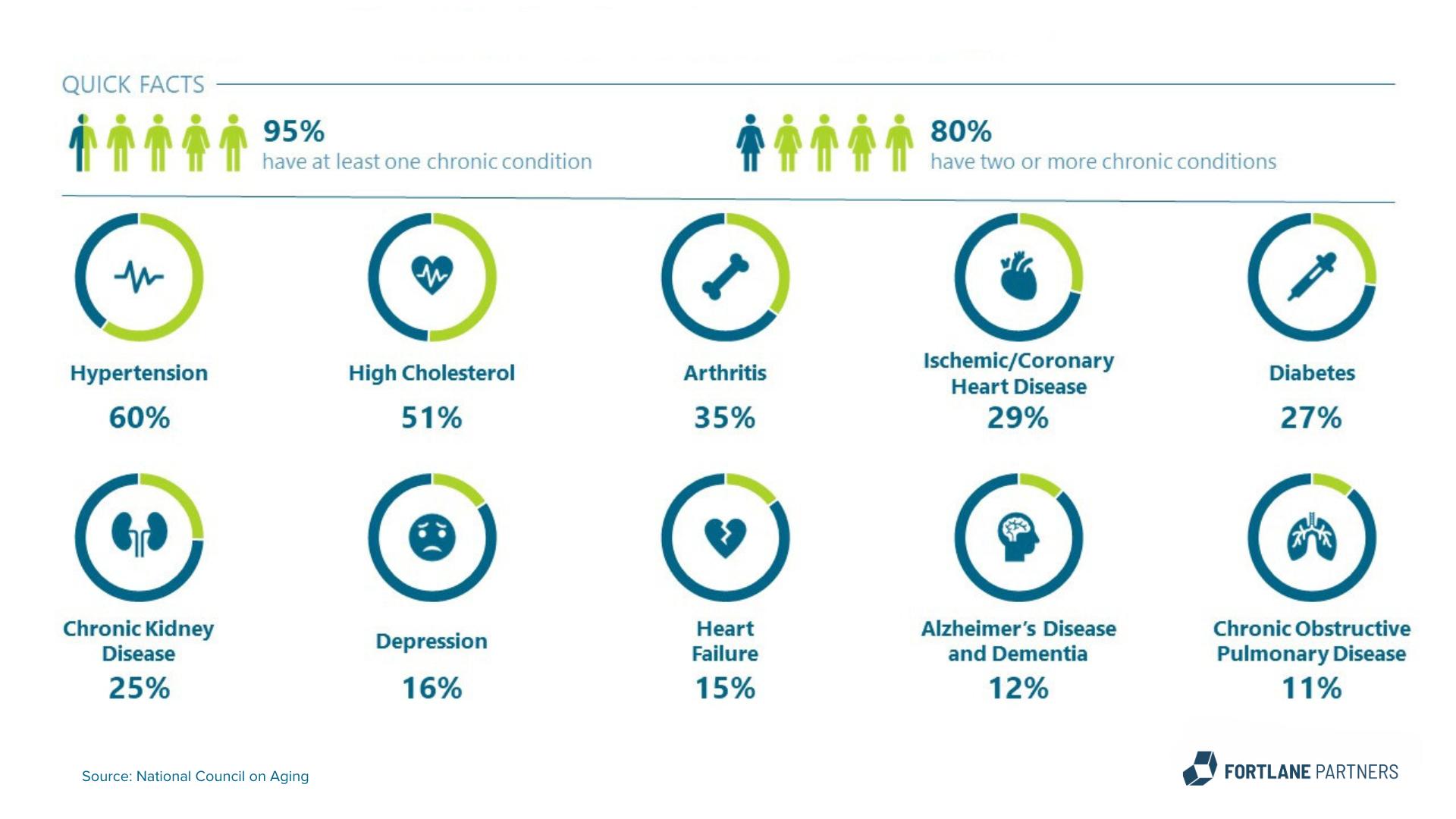
As many Western countries turn into super-aged societies, the prevalence of chronic diseases is expected to increase dramatically. 95% of adults aged over 65+ already suffer from at least one chronic disease, 80% have at least two or more chronic conditions.1 Patient longevity coupled with rising chronic diseases will pose a challenge for national health systems: The frequency of patient visits as well as the burden of monitoring patients with complex chronic diseases is already evident. NHS outpatient attendance data is showing a stark increase for ages 50+.
If treatments are not adequate, the follow-on burden to the healthcare system can be a multiple of the resources of an initial correct treatment. The risk posed by “moderate” chronic diseases such as obesity and hypertension to develop into severe diseases highlights the need for early intervention and disease management.
Today’s healthcare systems will not be able to cover the ballooning patient load and chronic disease prevalence. On top, resources will be become even tighter going forward due to budgetary constraints and retiring baby-boomer HCPs.2
Diabetes crisis
The looming chronic disease crisis can be well illustrated in diabetes, which already affects 27% of the US population and causes USD 12k in diabetes-related health expenditures per person in the US.1 In Germany, there are currently 11m people suffering from diabetes and a further 2m people are estimated to be un-diagnosed. The outlook for the development of this disease is of great concern: In Germany, every year more than half a million adults are diagnosed with diabetes, which equals ~1,600 new cases every day.3 High blood sugar over a long period of time damages blood vessels and nerves and can cause a multitude of chronic complications. Consequences are e.g., heart attack, stroke and retinal diseases.
Without transformative changes a growing part of the population will turn diabetic and require daily insulin shots; and if we do not empower those diabetics to monitor and manage their glucose levels tightly, the damage occurring slowly over a long period of time will result in a wave of “high-maintenance”, multi-morbid patients.

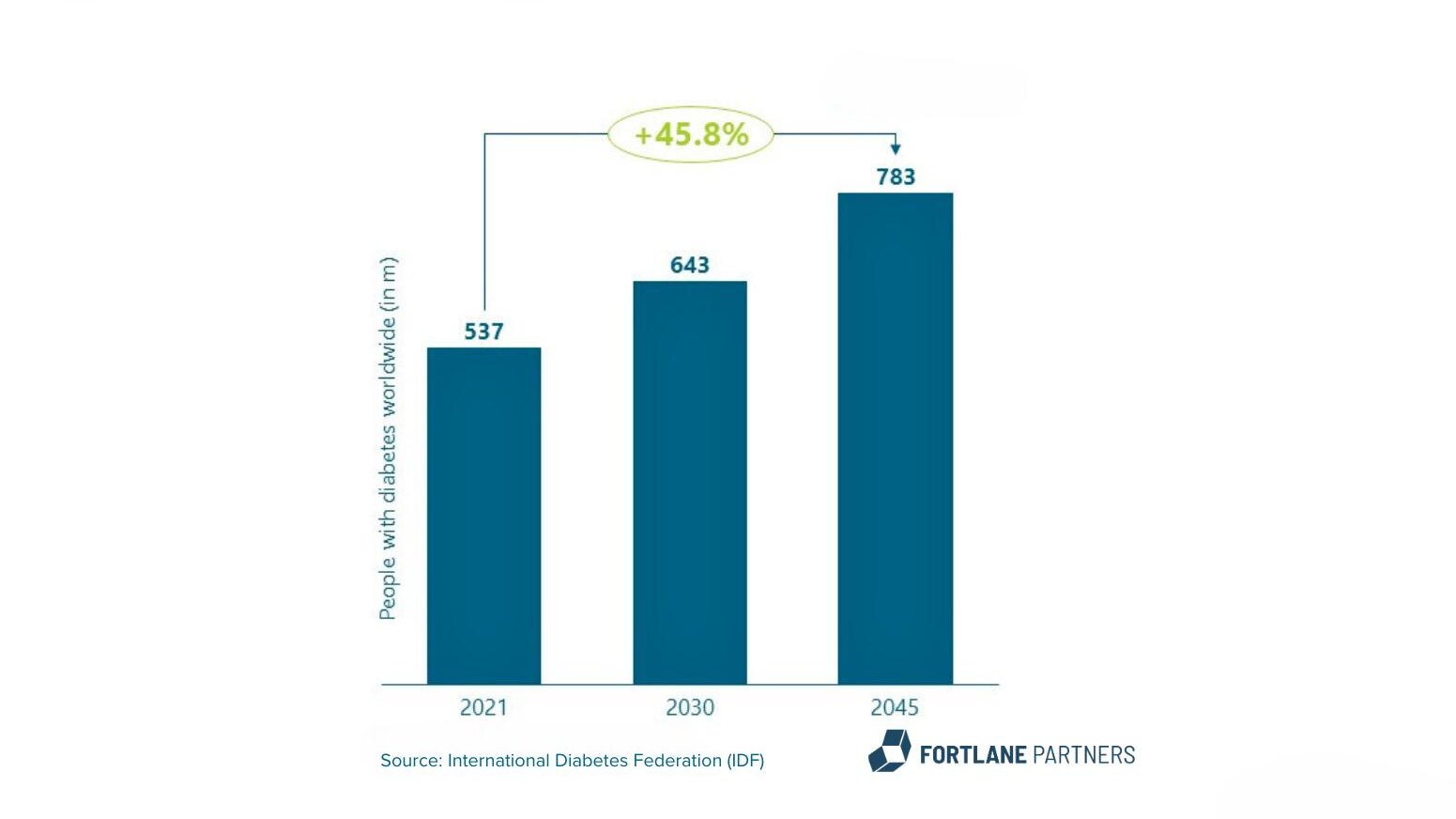
How can this development be stopped or at least slowed down?
Obesity paves the path of the more frequent Type 2 diabetes. So early intervention is needed to prevent pre-diabetic patients from developing diabetes in the first place. Additionally, people who cannot be prevented from becoming diabetic need more support to manage their disease in the best possible way. For combating obesity and for precision obesity management we need scalable solutions providing sustainable results. Despite the emergence of highly efficacious prescription pharmaceuticals, this is only achievable by integrating digital health solutions.
In Germany, there are now about 50 reimbursed digital applications (“Digitale Gesundheitsanwendungen” = “DiGA”) and despite many obstacles, the number of prescriptions is steadily growing. Over the three years to September 2023, a total of 374 thousand DiGAs have been used5, either instead of or in combination with medications. In the obesity area, for example, they can either support by tracking the daily food intake and developing a personal nutrition plan or by suggesting different sports activities based on individual preferences. If this kind of treatment is not sufficient by itself, people with severe obesity can receive prescription therapeutics such as “GLP-1 agonists” that reduce the feeling of hunger. Large pharma companies like Novo Nordisk, Eli Lilly and Boehringer Ingelheim have launched or are developing Rx obesity therapeutics. Combinational treatments of digital applications and therapeutics for weight loss can be utilized in a stage where regular nutrition plans for a diet are not sufficient anymore. To handle the chronic disease burden, digital, hybrid, and tech-enabled care needs to be utilized, allowing patients to be managed and cared for outside of the traditional healthcare setting.
Even for large pharmaceutical players, it is not sufficient anymore to focus solely on their therapeutics – they need digital tools, both for market access and for patient adherence. Partnerships that incorporate a digital strategy facilitate ongoing contact with the patient throughout the entire patient journey.
- For example, Novo Nordisk has entered into a partnership with the online pharmacy DocMorris to jointly build an “obesity hub” for patients, supporting them in each phase of the patient journey. Further digital support is provided via the HCP locator. For adherence, further digital tools (e.g., Oviva Direkt, zanadio), are utilized.
- Another example is the partnership between Liva Health and NHS, who have jointly developed the NHS Digital Weight Management Programme. It offers remote access to weight management services for people with obesity, diabetes, or hypertension, including three different levels of support.
This combination approach aims to achieve a lasting effect while staying close to the patient and minimizing costs as well as time effort. The barrier for patients to stick to the recommended therapy decreases as convenience increases, leading to a more lasting effect.
Summary
Chronic diseases become very prevalent in the lives of many people as they age, posing a severe burden to their health, but also to the national health systems. The challenge will be to deal with the increased pressure on the healthcare systems while providing adequate treatments and care to patients.
Therefore, new integrated approaches need to be developed: The utilization of digital tools allows for more efficient and targeted treatment of patients, empowering them to monitor their diseases remotely and independently from their healthcare providers. Adding digital therapies and tools to pharmaceutical treatments results in a hybrid patient journey, providing patients with a more sustainable outcome and a deeper understanding of their disease.
Sources: [1] National Council on Aging, 2022, [2] Health Care Practicioners, [3] Deutsche Diabetes Hilfe, 2022, [4] International Diabetes Foundation, 2021, [5] GKV Spitzenverband, 2023
KontaktSprechen Sie uns an

Was gibt es Neues?Das könnte Sie auch interessieren...