Navigating the AI shift: a call for HR-IT skill synergy
As AI becomes embedded in day-to-day operations, companies are witnessing a profound shift – not just in technology, but in how organizations manage work itself. AI agents are no longer futuristic concepts; they are becoming digital coworkers. This transformation demands a new partnership between two critical functions: Human Resources and IT. To successfully lead the AI-enabled workforce transition, HR and IT must align not only on systems but also on shared ownership, skills, and governance.
Scroll down
From support functions to strategic co-stewards of the workforce
Historically, HR and IT have occupied distinct functional territories. HR focused on people, culture, and talent, while IT managed systems, tools, and data. But with the emergence of autonomous AI agents capable of completing workflows, learning over time, and interacting with systems independently, the boundaries between these domains are blurring.
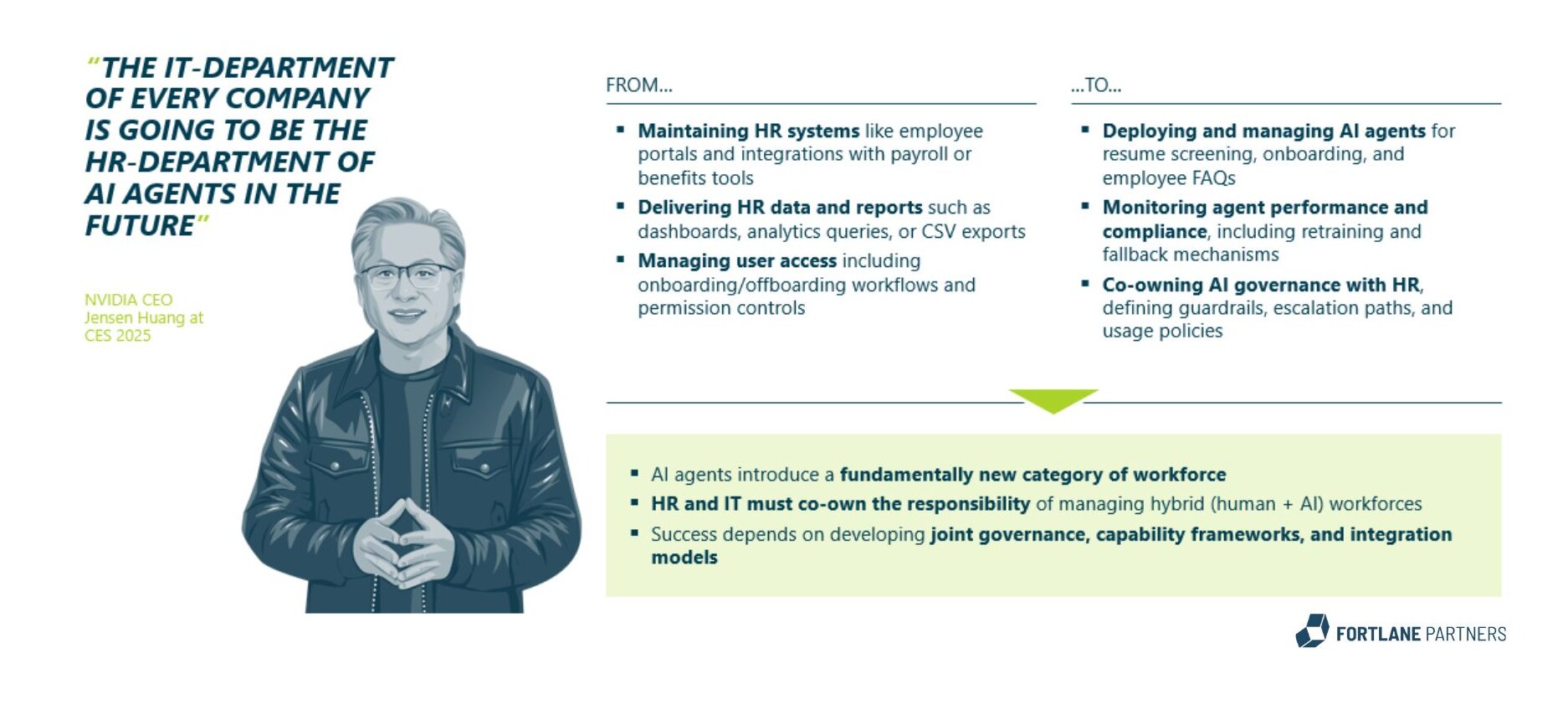
As NVIDIA CEO Jensen Huang recently stated: “The IT department of every company is going to be the HR department of AI agents in the future.”
What this means is clear: AI agents require governance like people – onboarding, lifecycle management, ethical oversight – and both IT and HR must collaborate to make it happen.
Understanding AI agents: more than automation
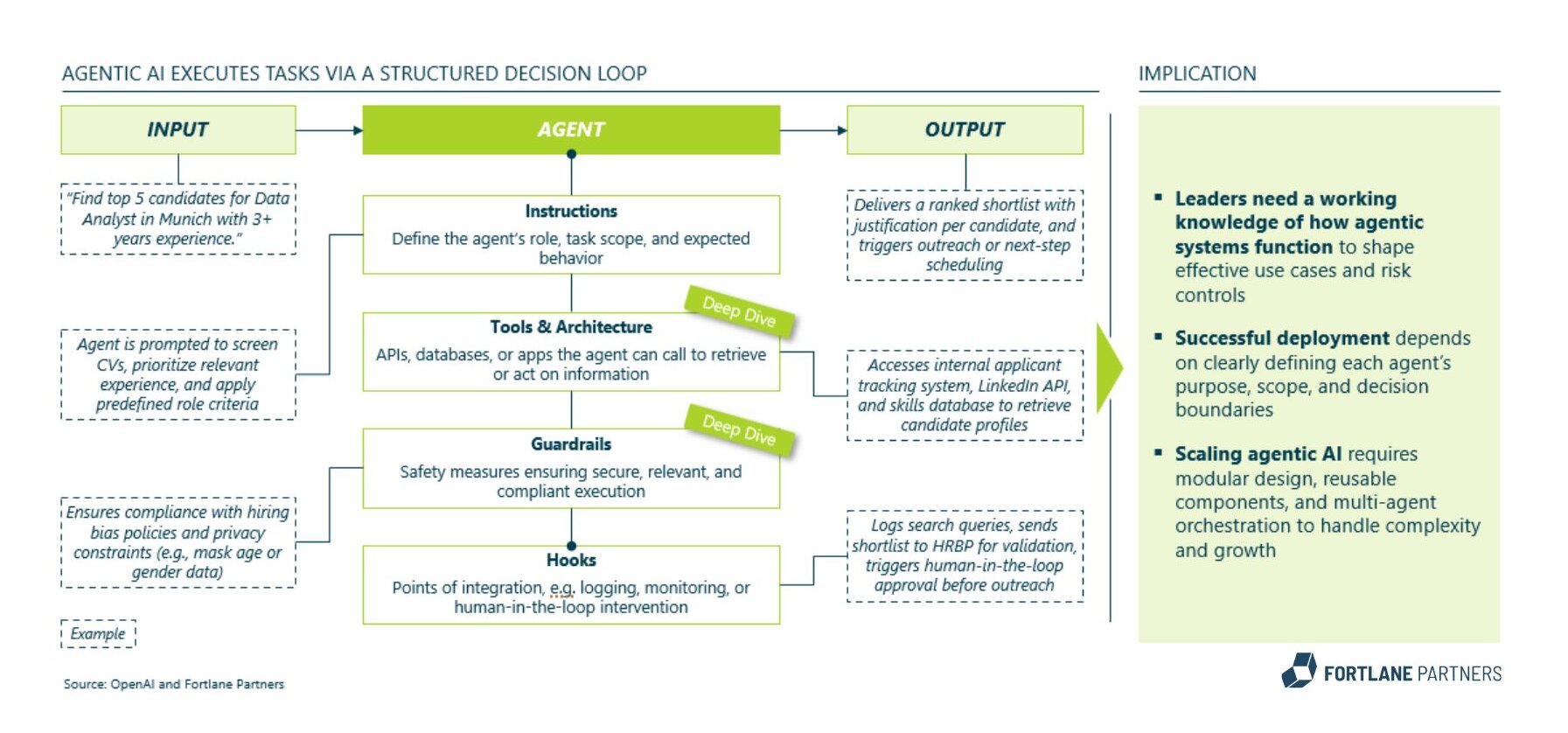
To understand why this shift matters, we must define what makes an AI agent different from a chatbot or automated script. AI agents are autonomous systems that:
- Interpret user intent and contextual data
- Make decisions independently
- Use tools or APIs to act
- Learn over time and adjust behavior
- Work within guardrails and hand off to humans when needed
Unlike typical automation that follows linear, rule-based logic, agents operate in decision loops. They can reflect, plan, act, and escalate. This requires new thinking around roles, workflows, and system architecture.
The case for HR-IT collaboration
AI agents will increasingly take on tasks within the HR domain – resume screening, onboarding, learning pathways, FAQ handling, performance analytics – and must do so securely, ethically, and in a way that fits into human-centric organizations. That cannot be achieved by HR or IT alone.
Key areas of synergy include:
- Workforce planning: HR defines future roles and skills; IT assesses technical feasibility and agent capabilities
- Governance & guardrails: Shared responsibility to ensure safety, compliance, and responsible behavior from agents
- Data strategy: Joint custodianship of sensitive employee and candidate data across AI workflows
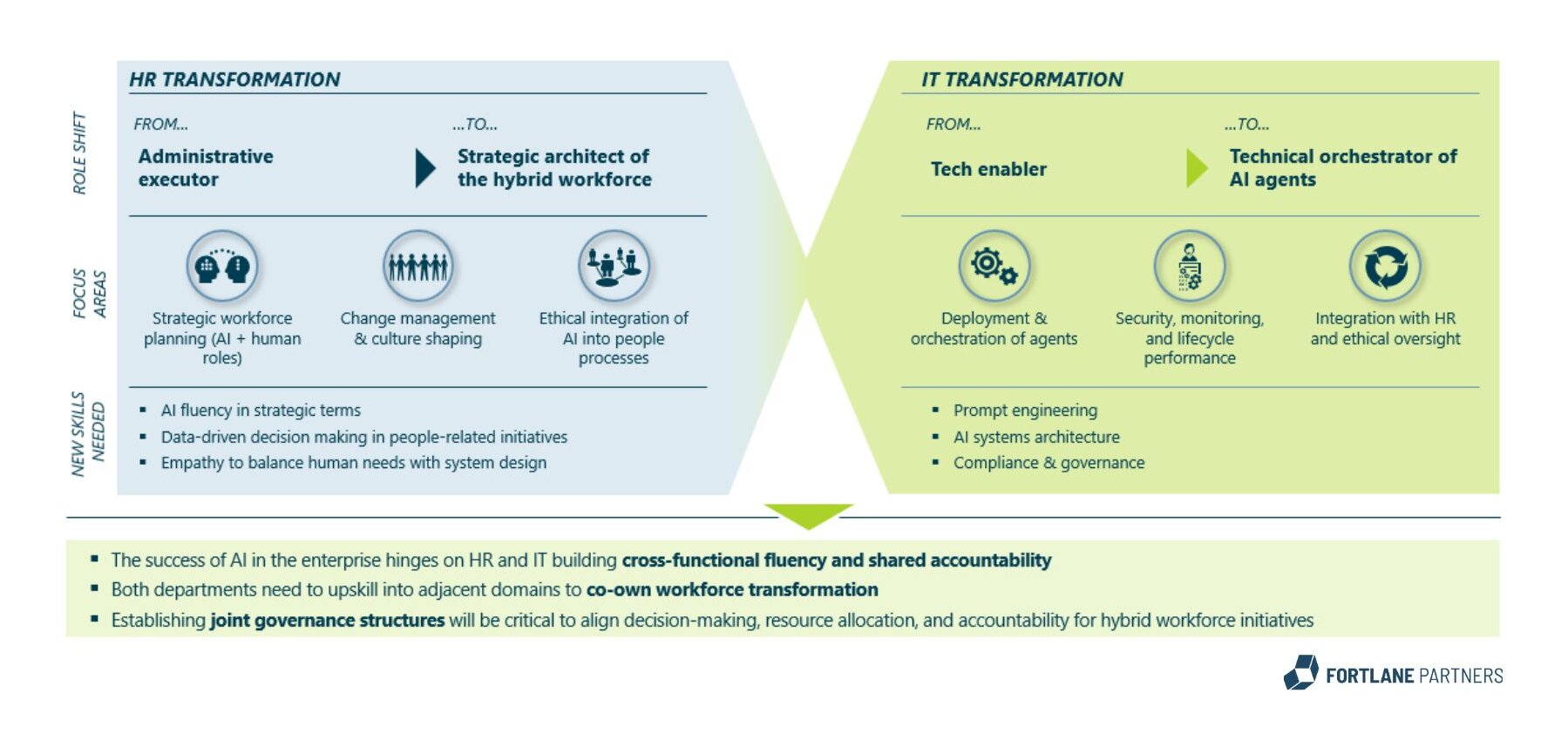
- Capability building: Upskilling both HR (in AI logic and tooling) and IT (in people systems and ethics)
Together, HR and IT must build a hybrid operating model for managing both human and machine contributors.
A roadmap to building HR-IT synergy
Building HR-IT synergy requires more than alignment – it needs structure, governance, and capability development. The first step is to establish a joint taskforce with clearly defined roles, responsibilities, and escalation paths. This creates a formal foundation for shared decision-making and cross-functional ownership.
Next, identify and prioritize AI agent use cases in HR - such as recruiting, onboarding, or employee services. Each use case should be assessed based on feasibility, value potential, and governance needs, with clear ownership assigned to either HR, IT, or both.
Once use cases are defined, organizations must set guardrails. This includes developing ethical standards, compliance rules, and fallback mechanisms to ensure agent behavior remains safe, relevant, and auditable.
Finally, success depends on capability building. HR must gain fluency in AI orchestration and prompting, while IT needs to understand HR workflows and employee experience. Cross-functional training and targeted pilots help validate the model, enabling a scalable, secure rollout of AI agents across HR.
Summary
The AI shift is not just about technology – it’s about transforming how organizations think about work, roles, and value creation. As AI agents become part of the workforce, the boundaries between IT systems and people systems collapse. The winners will be those organizations that build early HR-IT collaboration, establish shared governance, and invest in new skill sets on both sides.
At Fortlane Partners, we support companies in turning AI disruption into competitive advantage - by rethinking roles, redesigning processes, and reskilling talent to lead the AI-enabled future.
KontaktSprechen Sie uns an


Was gibt es Neues?Das könnte Sie auch interessieren...